


I remember when I was little and visiting my aunt, uncle and cousins’ home in a very rural part of Maryland; the house sat on 55 acres and was a kid’s dream come true as it was plenty of space to run and play. But my Mom would always check me over when we got home and I didn’t quite understand why. I assumed it was for a possible bee sting or mosquito bite.
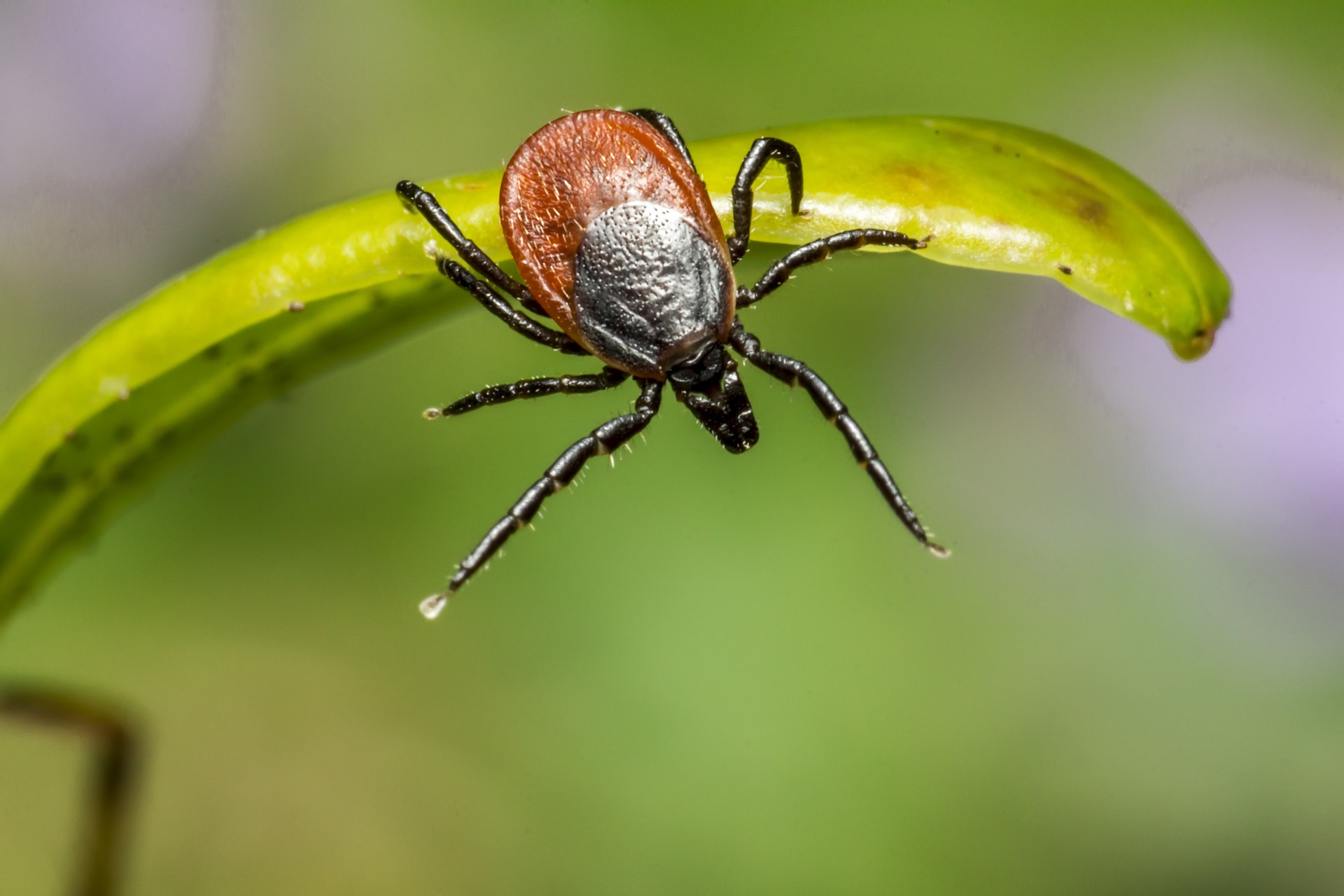
Later, I learned that because there was a lot of woods, tall grasses and deer on the property, my Mom was checking for ticks.
Back then, for me, ticks were just another bug that liked to bite and feed off of your blood and you may get itchy; pretty much like a mosquito bite. No big deal, right?
Boy, I was wrong!
Little did I know what a tick bite can ACTUALLY do to the body.
It wasn’t until I was bitten by a tick about 6 years ago and experienced symptoms so debilitating that I took emergency medical leave from work, wasn’t able to leave the house and between expenses for doctor visits, hospital visits, testing, prescriptions, and supplements I spent nearly $10K.
All because of one, lowly tick.
And that is why, my friends, I plead with you to take precaution when being outside; especially around woods, tall grasses and weeds and any place that houses animals. Yes, even the zoo! Animals are known to carry ticks.
When you think of a tick bite, you think of Lyme Disease. And you may think of the “bullseye” rash that develops after the bite. But, surprisingly, that is only the tip of the iceberg.
In addition to Lyme, you can also contract the following infections from a tick:
- Alpha-gal Syndrome
- Anaplasmosis
- Babesia
- Bartonella
- Colorado Tick Fever
- Ehrlichiosis
- Powassan
- Q Fever
- Rocky Mountain Spotted Fever
- Tularemia
According to Igenx.com, “In the United States, 77% percent of vector-borne diseases are transmitted by ticks – with numbers increasing dramatically in the recent decades. Although only about 35,000 Lyme disease cases are reported to the Centers for Disease Control and Prevention (CDC) each year, an estimated 475,000 new cases are diagnosed in the U.S. each year, making Lyme disease the most common tick-borne disease. Cases of Lyme disease are estimated to be 8-12 times higher than the actual amount of reported cases. This is due in part because the symptoms can be difficult to pinpoint when seeking a diagnosis, or because people don’t have access to proper healthcare which prevents them from getting diagnosed.”
When I visited a naturopathic doctor and found that I tested positive for both Babesia and Bartonella, he informed me that between the months of March-June is the time when ticks are most aggressive. This is due to the fact that ticks often lay their eggs when the spring season begins and once the babies are hatched, they possess a voracious appetite for blood.
So what are the symptoms of a tick bite and how do doctors normally test for tick infections?
The symptoms of a bite can include:
- fever
- chills
- body aches
- joint pain
- headache
- dizziness
- fatigue
- rash
- gastro issues
- insomnia
- anxiety
- brain fog
- loss of appetite
- speech loss
- swollen lymph nodes
- blood pressure fluctuations
- shortness of breath
- heart palpitations
- death (in extreme cases)
Symptoms usually appear a few days or even a week after the bite. And don’t always rely on the “bullseye” rash that supposedly appears after being bit by a tick; only 60%-80% of people develop that rash so it is imperative to listen to your body and know your symptoms.
To give you an insight on how tiny ticks are, especially the nymph mode where they get aggressive for blood, Lyme Mexico Clinic posted this:

Pretty small, right? Even when checking your body for ticks, they can be easily missed due to their tiny size.
So if you are exhibiting symptoms of a tick bite, your intuition would be to go to the doctor and possibly get a blood test. But what if I told you that there is a prejudice and ignorance regarding Lyme Disease amongst the medical field?
Let me explain…
Lyme Disease is a recognized public health threat; the CDC even states that Lyme Disease “is the most common vector-borne disease in the United States.”
Regarding the blood test, ELISA, (Enzyme-Linked Immunoassay) that is normally ordered by a doctor to test for Lyme, has a sensitivity averaging around 56%, meaning you have around a 56/100 chance of testing positive. Not exactly accurate!
The ELISA test checks for an immune response to the Borrelia (tick infection). And there lies the fault as the Borrelia may not be able to be detected on a blood test up to a month or several months after the initial bite. So of course you will get a negative blood test for Lyme, BUT doesn’t mean you don’t have Lyme. Even if you test positive for the ELISA, it doesn’t mean that is a positive for Lyme as your body may be producing antibodies for something else and not necessarily for Lyme. Please note that the ELISA test is known for producing false positives.
Another routine test ordered to test for Lyme is the Western Blot. It is similar to that of the ELISA test where it checks for certain antibodies. It is said that if you test positive for ELISA, you need the Western Blot to confirm; however, Western Blot can also produce false positives.
According to the Cleveland Clinic, these tests aren’t the best due to:
- Antibodies against B burgdorferi take at least 1 week to develop
- The background rate of seropositivity in endemic areas can be up to 4%, affecting the utility of a positive test result
- Serologic tests cannot be used as tests of cure because antibodies can persist for months to years even after appropriate antimicrobial therapy and cure of disease; thus, a positive serologic result could represent active infection or remote exposure
- Antibodies can cross-react with related bacteria, including other borrelial or treponemal spirochetes
- False-positive serologic test results can also occur in association with other medical conditions such as polyclonal gammopathies and systemic lupus erythematosus
It is important to point out as well, that these tests only test for B. burgdorferi, and there are at least nine other tick-related infections out there and these tests do not have the ability to test for those nine. So if you do get a negative ELISA and Western Blot test, please note that it doesn’t mean you are in the clear and you may still be infected by a tick.
LymeDisease.org posted this figure regarding testing:

They said, “This study indicates that the current testing approach for Lyme disease is highly inaccurate. This insensitive test will result in many patients who are actually infected with Lyme Borreliosis going undiagnosed. These results lend support to the recently published conclusion of Stricker and Johnson to the effect that FDA-cleared commercial serological testing for Lyme disease is inadequate for the diagnosis of the disease.”
Now what about the medical gaslighting? Why aren’t doctors on board when it comes to Lyme and other tick infections? Why do so many people get misdiagnosed?
MDPI states, ” medical gaslighting is a type of abuse aimed at making victims question their sanity as well as the veracity and legitimacy of their own perspectives and feelings.”
But why are doctors so quick to dismiss Lyme and other tick-borne illnesses? Especially when a patient comes with debilitating symptoms that are directly affecting their way of life? Aren’t doctors supposed to uphold the Hippocratic Oath? I know this personally as I went from doctor to doctor, from specialist to specialist and they all dismissed me and suggested I see a psychiatrist. It is one of the worst feelings a human being can possibly feel; not being believed, not being listened to and not being helped.
The majority of doctors have a mindset that Lyme (note that it is only Lyme and not other tick infections as listed above) is caused by “borrelia burgdorferi“, is detected by the ELISA and Western Blot tests, and can easily be fixed with a round of antibiotics.
Apparently after doing research, the debate regarding Lyme is quite intense and doctors who are interested in furthering research into Lyme or have differing opinions rather than the “status-quo”, are quick to be blasted and, in doing so, jeopardize their careers.
WBUR in Boston produced a series called “Living With Lyme”. They reached out to dozens of specialists in MA to get their input on Lyme and tick infections. Many didn’t return phone calls. Two doctors agreed to speak to WBUR off the record with one of them saying, “If you say something wrong, people pounce.” The other doctor said, “it’s a lose-lose situation” to speak publicly.
Dr. Gary Wormser, an infectious disease doctor at Westchester Medical Center in NY was quoted:
Fundamentally, we have a lot of patients in the general population who have non-specific and quality-of-life-impairing symptoms. It’s just a fact of life, and these patients are frustrated and I don’t blame them because the mainstream medical community often doesn’t have the answers they want. They can’t be given a specific diagnosis or a specific therapy and they’re suffering and don’t know where to turn. So you can imagine the appeal when they go to a doctor that says, finally, ‘I know what you have. The other 25 doctors that you’ve seen have missed the diagnosis completely. You actually have chronic Lyme and I sort of know what to do.
And here’s what they tell them: ‘I’m going to give you these antibiotics long term and if you feel better, great. If you feel worse, that’s also indicative that the antibiotics are working. … And if you have good days and bad days, well, chronic Lyme is hard to treat.’ So really any outcome that the patients experience therefore is consistent with the presumed diagnosis of chronic Lyme. So you can imagine the situation that patients are put in.
Patients have illnesses, sometimes they have waxing and waning periods on their own. Sometimes the sense that somebody’s actually looking after them and seeing them on a regular basis is very comforting and actually helpful and may be therapeutic. But the data that antibiotics actually would have a logical role in post-Lyme symptoms aren’t there. And the data on the actual effects beneficially of treatment are ambiguous at best or negative in the studies that have been done.
Dr. Daniel Cameron, former president of the International Lyme and Associated Diseases Society, states:
I think a second look at the literature will say, ‘Listen, these people are sick, there’s plenty of evidence.’ We have to move beyond the soundbites on both the ILADS and IDSA [mainstream Infectious Diseases Society of America]. I feel that doctors are torn between those two organizations, the IDSA and ILADS. They’re also torn when their local infectious disease doctor might complain or the medical board is questioning their treatment, so doctors don’t look at the evidence like they should, they look to the right or the left.”
In fact, the following disorders may be Lyme in disguise:
- fibromyalgia
- chronic fatigue syndrome
- juvenile idiopathic arthritis
- summer flu
- cellulitis
- arthritis
So it is down to pure ignorance and bias, all at the expense of the patient. Very sad indeed!
If you do any research on antibiotics and Lyme you will read that they are not always effective; they may be only effective during the first few weeks after initial infection. And remember….antibiotics kill both the good and bad bacteria in your body and long-term antibiotics (which most doctors will prescribe for Lyme) can be harmful and really unbalance your gut flora. If you have read my previous post about how an unbalanced gut can create a host of health issues, this should come as no surprise.
So what is the best way to combat a tick-borne illness?
First of all, prevention is key!
If your immune system is in peak condition, it may be able to destroy the infection; thus, preventing the infection from going any further. To give your immune system a boost and help weaponize it for any future infections:
- eat a clean diet
- avoid sugars as sugars weaken the immune system
- get plenty of sleep
- exercise
- avoid smoking
- avoid alcohol
- avoid recreational drugs
- take Vitamins A, C, D, and E
- take zinc
- practice good hygiene
A supplement I HIGHLY recommend and have personally used is Tick Immune Support Supplement by Zenmen. It contains Japanese Knotweed, Cat’s Claw, Chinese Skullcap, Black Pepper, and Sweet Wormwood. This is something you can take every day to prevent a tick infection and you can also take it as an immune booster or if you are currently fighting a tick infection. It is excellent. I especially recommend you take this during the tick season months, March thru June. I take it before I mow the lawn or do any gardening; do not want to risk getting infected ever again.
There are bug sprays out on the market to repel ticks, but those same sprays also include deet, a chemical that is highly controversial and may or may not be dangerous to humans.
If you are looking for an all-natural bug spray that repels ticks, you can use:
- Nantucket Spider Tick Repellent Spray
- Murphy’s Naturals Lemon Eucalyptus Oil Insect Repellent Spray
- Wondercide Insect Repellent
- Green Koala Organic Bug Spray
So what can you do if you are currently experiencing symptoms of a possible tick bite? If your doctor(s) aren’t helping you and are at the point of now telling you “it’s all in your head”, you have options.
I didn’t get the help I needed until I visited a naturopathic doctor. I created a ND directory so that you may find one in your state. They listen to you and provide results. They know the correct testing that needs to be done that can accurately diagnose you.
In fact, the red flags on my first testing with the ND included:
- DHEA Sulfate (High) – adrenal glands are producing too much of the steroid hormone, dehydroepiandrosterone sulfate
- Histamine (High) – body can’t break down histamine due to low DAO
- Reverse T3 (High) – thyroid is producing too much hormone
- Cortisol (High) – too much cortisol is being produced and it’s your body’s natural response to threats of harm or danger
- Vitamin D (Low) – a deficiency in Vitamin D which is responsible for bones, muscles, cell growth, and reducing inflammation
The ND will provide you with a treatment plan (doesn’t involve antibiotics) to not only strengthen your immune response, but attack and destroy the bacteria. They will also provide supplements/tinctures to help lessen your symptoms so that you can feel better and go about your daily life.
The tinctures I took from Nutramedix were a lifesaver. My ND had me on the Cowden Program and I continued to be on that program for a year, but felt better within a month of starting it. It was amazing! You never truly appreciate your health until it is taken away from you.
Yes, this post is long, but there is so much information to download regarding ticks, treatments, the medical field, naturopathic medicine, statistics….etc. And since we live in a society where the almighty dollar has rule, it is important that we listen to our bodies, question our practitioners, stand up for ourselves and keep informed of what is going on “behind the curtain”.
For more info, I encourage you to visit:
In closing, I hope you take this post to heart to protect you and your families this spring season. Just like what Benjamin Franklin once said:
An ounce of prevention is worth a pound of cure




Leave a Reply